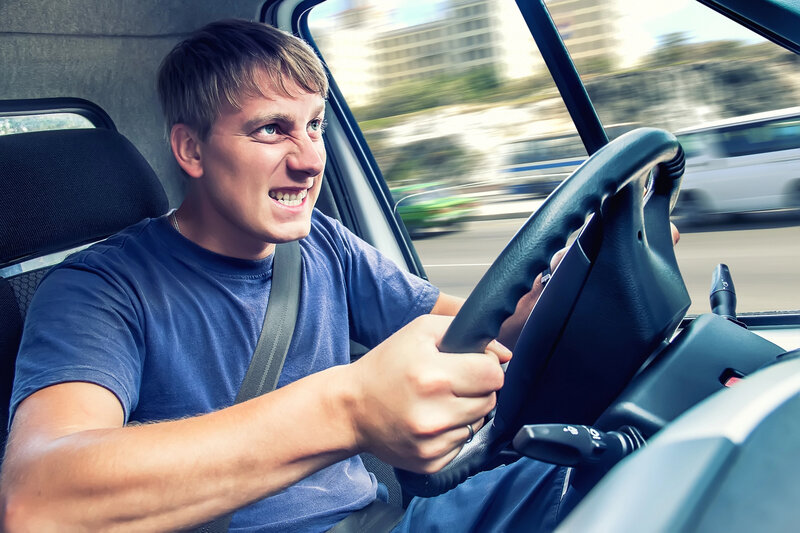
Anyone who drives in the Bay Area experiences occasional road rage. However, chronic road rage is dangerous for you, your passengers, and others (including bikers and pedestrians). Learning more about the psychology of road rage can help you take control of your emotions and responses behind the wheel.
Road rage is not a clinical psychological term but is widely accepted as a legitimate phenomenon. It describes traffic situations when a person’s anger leads them to drive aggressively.
This consists of any of the following behaviors:
Road rage resulting in these or other aggressive driving behaviors puts you and others at risk for a car accident.
Unfortunately, National Safety Council (NSC) analysis of accident data indicates that more than half of vehicles involved in fatal crashes include the same factors associated with road rage.
Very sadly and even more disturbing - road rage is associated with just over 1% of all traffic-related fatalities. That tells us that 1 out of every people killed lost their lives unnecessarily because road rage is preventable.
Recent studies from psychologists who analyzed police reports and then spoke with a large number of subjects found that those prone to road rage are:
In truth, their emotional mindset is immature, so they have the reactivity levels of a young toddler or child rather than a more mature adult.
If you experience road rage, it’s time to take pause and get to the heart of the matter. It puts yourself and others at risk and is a sign that something is out of balance.
Studies show that some people are more prone to others when it comes to experiencing - and acting on - road rage. Those who are the most apt to feel the internal volcano erupt while driving are:
Young males are the most likely to perpetuate and act on their road rage. This is one of the reasons it’s so important to set clear driving rules and boundaries from the beginning.
Review teen driver facts so they understand (to the best of their ability) how they share a higher risk on the road and that their actions can risk others’ lives as well.
There’s no mystery that Bay Area traffic is stymied during peak commute hours. Being stuck in traffic is a common trigger for those who experience road rage. If you aren’t willing to use public transportation or ride-sharing options, it’s time to surrender to the reality of daily traffic and make the most of it.
Learning to stay sane while stuck in traffic includes:
The more you can make that time work for you rather than against you, the less angry you’ll feel.
As referenced above, many who experience road rage are already prone to anger and frustration in their lives outside of driving. So, if you get into the car already angry or upset, you’re more likely to experience road rage.
Interestingly, one of the common links between those who experience and act on their road range is their feelings of anonymity. In other words, if they don’t know you, you can treat them worse than if they recognized you.
See if you can cultivate a feeling of shared humanity - rather than anonymity - on the road. Drive like the cars around you held your mother, grandmother, or children. You don’t want to be the cause of their loved ones’ anguish, pain, or loss of life.
Some people are more passionate than others, making every emotion feel more intense. So, while you may be able to “cure” yourself of road rage, the odds are more likely that you can diminish its intensity and eliminate your reactions when you feel angry on the road. Diffusing the intensity and frequency of road rage episodes can be game-changing because it automatically increases road safety for you and those who share the road with you.
Here are some things you can do to reduce road rage episodes:
These were very successful when applied to the subjects that were studied in the aforementioned research on road rage. The great thing is that the more you practice stress management and relaxation exercises, the more you use them in daily life. In addition to minimizing road rage, you minimize stress levels in general.
Once you get used to your new routine, you’ll appreciate that allowing extra time for the drive helps to reduce the pressure you feel to hurry, hurry, hurry.
If you have a newer car with all the latest safety features, learn to let your car be your guard. Honor the beeps and override your impulse to make sudden lane changes or tailgate.
Here’s another thing to remember, stress, and enforce when you have teen and young adult drivers in the house: Defensive driving. It is the complete opposite of driving reactively and in answer to your road rage (which is a sign that you’re not in control of yourself or your emotions). Make it a game and reward yourself when you do the opposite of what you want to do:
These and other defensive driving habits go a long way toward preventing unnecessary traffic accidents, injuries, and fatalities.
As Bay area tow truck drivers and roadside assistance technicians, the J&T Towing team attends accidents linked to road rage daily. We encourage you to “Just say NO” to road rage and do your part to stay calm and safe on the roadways.
If you find yourself in a bind, we’re here to help. Call us at 707-356-4613 or contact us online and we’ll have a technician out as soon as we can - 24/7 and 365 days per week.
