We spend most of our days providing roadside and towing assistance around the Bay Area, so we hear everyone’s opinions on driving technology. For some, it can feel like a lifesaver; for others, it causes a range of woes.
Modern driving technology affects vehicle performance, efficiency, and driver safety in many ways. While it may seem like auto-related technology is relatively new, techies have been working to improve the auto industry since the invention of the automobile in 1885.
The impact of technology on modern driving links all the way back to the first inventor’s desires to:
Today, just about any technological innovation that improves home or work life will eventually be used in vehicles. Let’s examine some of the most common technologies affecting today’s cars and trucks, as well as their pros and cons.
Our 21st-century electric vehicles have had a long and complicated history. Most people don’t realize that electric cars were the norm during the turn of the 19th/20th century and then again in the mid-90s (check out the documentary Who Killed the Electric Car). Today, hybrid and electric cars are the norm, capitalizing on the culture’s desire to reduce dependence on fossil fuels and leverage the clean(er) energy generated by solar and other green energy sources.
It may be a while before most vehicles are electric, and perhaps that may never happen. However, it’s obvious from the number of electric vehicles that - for the most part - the future of cars is electric.
Cleaner emissions, better performance, less dependence on foreign oil sources, reduced maintenance needs, smoother ride, quieter driving sounds.
Mining for the minerals used to make the batteries, lack of sustainability for used batteries, more expensive first-cost, limited driving time, long charging time when compared with refueling, much of the power currently used to power electric cars is from fossil fuels (not green energy).
Safety is always a top priority for auto manufacturers. We mentioned safety glass at the beginning of the post. Other well-known safety features we’ve benefitted from over the past many decades include things like:
If you purchase a car made in 2020 or later, odds it’s equipped with ever-improving safety features, like:
Insurance companies feel confident that these safety features reduce the risk of a car accident, minimizing accident-related injuries and fatalities.
Fewer accidents, proactive repair/maintenance of potentially threatening mechanical issues, increased passenger safety.
The unnecessary alerts/warnings can be distracting or annoying, can create false sense of security that keeps drivers less attentive on the road, adds to vehicle expense.
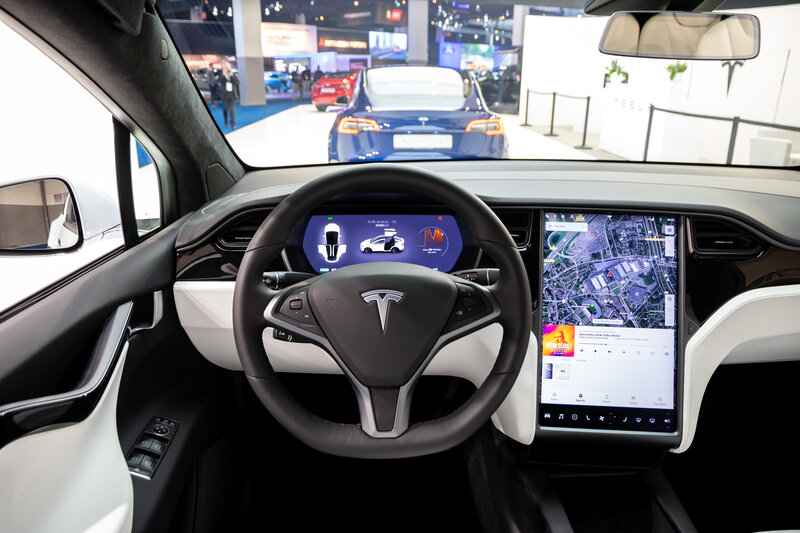
Of course, we couldn’t post an article about the impact of technology on modern driving without covering self-driving cars. While Tesla was one of the first manufacturers to bring self-driving cars to the middle class, just about every car maker is in on this technology now.
Self-driving cars are wonderful when it comes to long road-trips, but they are not entirely trustworthy. This technology fails, and when it does, it can cost human lives. Yes, people cause accidents too as the result of distracted driving, falling asleep at the wheel, risky driving choices, or becuase they’re intoxicated. However, there are clear legal protocols and a level of human-to-human accountability when that occurs.
In the case of self-driving cars, it’s hard to establish where accountability lies and what the “consequence” is for the automaker. A recent post from CBS News reports:
The U.S. National Highway Traffic Safety Administration has examined at least 956 crashes in which Autopilot was initially reported to have been in use. The agency separately launched more than 40 investigations into accidents involving Tesla automated-driving systems that resulted in 23 deaths.
Only time will tell whether the risks outweigh the benefits of self-driving cars.
Potentially enhanced safety features, increased efficiency, accessibility, and inclusion.
Technological shortcomings and flat-out failures, job loss in the transportation industry, privacy and security problems, loss of innocent lives, and legal issues are among the problems.
The National Highway Traffic Safety Administration (NHTSA) statistics prove that distracted driving is a leading cause of accidents. However, cell phone use accounts for many accidents falling under that umbrella.
While cell phone technology has innumerable benefits, it has roughly none when it comes to using a hand-held device while driving - and some studies are showing that collisions still occur when people use hands-free Bluetooth technology. Here are some statistics about cell phones and accidents:
There are plenty of pros associated with cell phone technology, but very few when it comes to driving. Cell phones are safest when not in use unless you need them to contact towing or roadside assistance after you’ve been involved in an accident or have broken down on the side of the road.
Major players in accidents, injuries, and fatalities associated with distracted driving.
Here at J&T Towing in Fairfield, CA, our technicians experience the positive benefits of technology at our work. Digital maps get us to our clients using the quickest routes available and our fleet of trucks is equipped with the latest and greatest. That said, we’re also well aware of how some of this technology relates to our clients’ accidents and breakdowns.
Whether you find yourself stranded at the mercy of failing technology or using your technological device contact us, at 707-356-4613, we’re here to help out 24/7 and 365 days a year.
