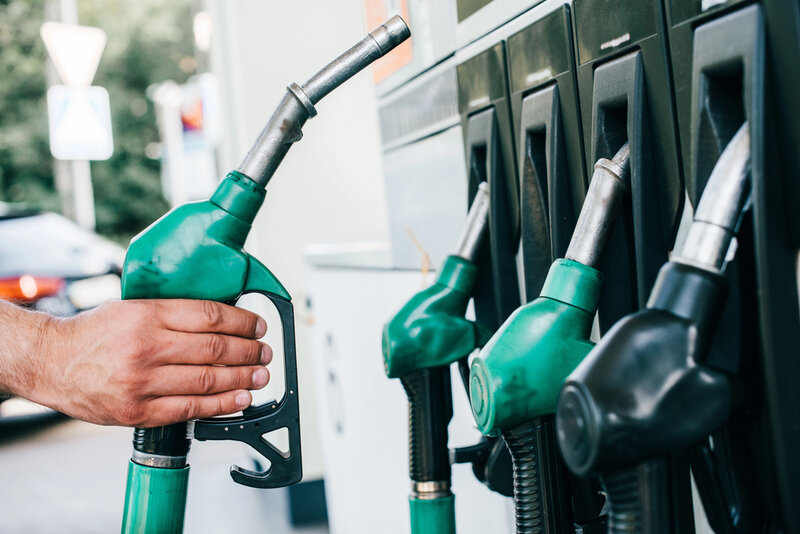
When you’re choosing your next vehicle, you’ll need to take into account more than just the make and model - fuel type plays a vital role in both performance and environmental impact. You’ve likely noticed the rising costs and ongoing debates about different fuel options at your local station, but there’s more to the story than price per gallon. From traditional gasoline to emerging electric alternatives, each fuel source offers distinct advantages and limitations that could notably affect your driving experience and long-term costs. Let’s examine what’s powering today’s vehicles and what might be fueling tomorrow’s transportation.
The humble gasoline that powers your car is remarkably complex, consisting of thousands of hydrocarbon compounds mixed together.
These hydrocarbons contain between 4 and 12 carbon atoms and include straight-chain alkanes, branched alkanes, cycloalkanes, aromatics, and alkenes, each playing a specific role in your engine’s performance. The antiknock index value typically ranges from 87 to 95 in U.S. fuels.
When you start your car, the spark plug creates an electric arc reaching 10,000°C, igniting this carefully blended fuel mixture.
The resulting combustion creates a controlled explosion that converts chemical energy into mechanical power.
You’ll find that gasoline’s versatility comes from its sophisticated production process, which starts with crude oil and involves multiple refining stages.
Various additives are then blended in to enhance performance, prevent deposits, and protect your engine from corrosion.
If you’re looking for a fuel that delivers exceptional value, you’ll find diesel offers superior engine durability with many engines lasting well over 200,000 miles.
Number 2 diesel fuel provides 139,500 BTUs per gallon, delivering outstanding power generation.
You’ll save money at the pump since diesel engines are 20-35% more fuel-efficient than their gasoline counterparts.
Your diesel vehicle will also provide impressive torque, making it ideal for towing heavy loads and handling demanding tasks.
While gasoline engines power most vehicles on the road, diesel engines stand out as marvels of engineering durability.
You’ll find they’re built with robust construction and higher compression ratios, allowing them to withstand extreme pressures and temperatures that would quickly wear down standard engines.
What makes diesel engines particularly durable is their simpler design. Operating at 1300-1600 RPMs, diesel engines experience significantly less mechanical stress than gasoline engines.
Without spark plugs or complex electrical ignition systems, there are fewer components that can fail.
You’ll also benefit from diesel fuel’s superior lubrication properties, which help protect internal parts from wear.
With proper maintenance, including regular oil changes and fuel filter replacements, your diesel engine can easily surpass 500,000 miles - often doubling the lifespan of comparable gasoline engines.
That’s why commercial industries consistently choose diesel for their heavy-duty applications.
Modern diesel engines offer remarkable fuel economy advantages that’ll save you money at the pump.
You’ll get 20-35% better fuel efficiency compared to gasoline engines, thanks to diesel’s higher energy density and more efficient combustion process. In real-world conditions, diesel trucks average 18 mpg versus 15 mpg for gas models. These engines can achieve up to 500,000 miles lifespan with proper maintenance.
You’ll benefit from diesel’s advanced technologies like turbocharging, which maximizes performance while maintaining efficiency. The fuel itself contains 10-15% more energy than gasoline, allowing you to travel further on each tank.
While diesel vehicles may cost more upfront, you’ll offset this through substantial fuel savings over time. For heavy-duty applications, diesel engines provide an ideal balance of power and efficiency that’s hard to match with other fuel types.
Because diesel engines utilize compression ignition and long-stroke designs, they excel at producing massive torque for heavy-duty towing applications.
These engines maintain higher resale value compared to their gasoline counterparts, making them a smart long-term investment.
You’ll find these engines can generate over 1,000 lb-ft of torque at low RPMs, making them perfect for pulling heavy loads without strain.
While gasoline engines typically focus on horsepower, diesel’s emphasis on torque makes it the superior choice for towing.
Modern diesel trucks can haul up to 40,000 pounds, thanks to powerplants like the Ford Power Stroke and GM Duramax.
You’ll also benefit from better fuel efficiency during long hauls since diesel fuel contains more energy per unit than gasoline.
The increased durability and thermal efficiency of diesel engines mean they’ll handle demanding towing tasks while maintaining reliable performance and lasting longer under heavy use.
As an alternative to conventional gasoline, E85 offers drivers a unique fuel blend consisting primarily of ethanol.
You’ll find it contains between 51% and 83% ethanol mixed with gasoline, with proportions varying by season and location to guarantee reliable cold-weather starts.
If you’re considering E85, you’ll need a flexible fuel vehicle (FFV) designed to handle this fuel type. High-performance vehicles like the Koenigsegg CCXR achieve 20% more power when running on E85.
While E85 can boost your engine’s horsepower and torque, you’ll experience lower fuel economy due to its reduced energy content.
However, you’ll benefit from reduced emissions of harmful pollutants and carbon monoxide.
You can find E85 at over 4,200 stations across 44 states, though it’s most widely available in the Midwest.
Despite its lower pump price, the decreased miles per gallon might offset potential cost savings.
While E85 offers specific advantages, compressed natural gas (CNG) stands out as another eco-friendly fuel option with remarkable benefits.
You’ll find that CNG produces 30% fewer greenhouse gas emissions than gasoline and 25% less than diesel, while also reducing air pollution and groundwater contamination risks. The extensive safety regulations govern the production and distribution of compressed natural gas.
Safety is a key advantage of CNG - it won’t explode in accidents due to its high ignition temperature of 1,200°F, and it’s non-toxic.
You’ll save money too, as CNG costs about one-third less than conventional fuels and requires less maintenance.
Your vehicle will benefit from extended oil change intervals and longer spark plug life. Plus, you’ll enjoy smoother start-ups, quieter operation, and the satisfaction of reducing dependence on foreign oil.
When you switch to electric vehicle fuel, you’ll save approximately $700 annually on fuel costs since charging is equivalent to paying less than $1 per gallon of gas.
You’ll make a significant environmental impact as EVs produce zero tailpipe emissions, contributing to cleaner air quality and reduced pollution in your community. With fewer moving parts, electric vehicles require less maintenance than traditional gas-powered cars.
Your electric vehicle can be powered by renewable energy sources like wind and solar, helping decrease dependence on fossil fuels while enjoying superior performance benefits like instant torque and quieter operation.
How much can you save by switching from gas to electric? The numbers tell a compelling story: you’ll spend about $0.05 per mile to charge an EV compared to $0.13 per mile for gas.
For perspective, you’ll pay around $56 monthly to charge at home, while a gas car can cost over three times more to fuel. Public Level 3 chargers provide the fastest charging in about 15 minutes.
Your savings depend on how you charge your vehicle. Home charging is the most economical option, while DC fast-charging stations cost about triple.
You’ll save even more if you have a home solar system. Time of day matters too - charging during off-peak hours can reduce your costs considerably.
The EPA estimates annual fueling costs at $550 for EVs like the Kia EV6, versus $1,950 for gas-powered equivalents like the Kia K5.
As the world shifts toward sustainable transportation, electric vehicles offer compelling environmental advantages that extend far beyond the road.
When you drive an EV, you’ll generate less than half the greenhouse gas emissions compared to gasoline vehicles over their lifetimes. You’ll also produce zero tailpipe emissions, which greatly reduces urban air pollution and health risks. The manufacturing of EV batteries creates emissions equivalent to 24,000 driven miles in a typical gasoline car.
The benefits keep growing as electricity sources become cleaner. By 2050, the change to zero-emission vehicles could prevent 2.79 million pediatric asthma attacks and save hundreds of infant lives.
You’re not just making a personal choice - you’re contributing to a healthier future. Plus, EVs support grid stability through vehicle-to-grid capabilities, effectively serving as mobile power storage units.
Since their introduction to the automotive market, hybrid vehicles have revolutionized fuel efficiency by combining traditional gasoline engines with electric motors.
You’ll find several hybrid configurations available, from mild hybrids that use electric power to assist the engine to full hybrids that can run on electricity alone for short distances.
The system works by pairing a gasoline engine with an electric motor, battery, and generator.
While you’ll primarily fuel your hybrid with gasoline, you’ll benefit from improved efficiency, especially during city driving. The electric motor assists during low-speed operation, while regenerative braking helps charge the battery.
Though you’ll pay more upfront for a hybrid, you can expect better fuel economy than conventional vehicles - series hybrids offer 18% better efficiency, while parallel hybrids deliver 24% improvement.
